Posts

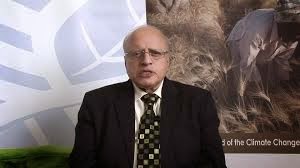
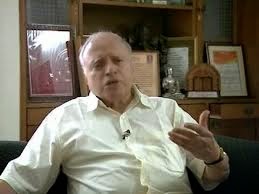
Dr. M.S. Swaminathan : Biography

Image
Part-9. Became Rice Research Institute Director : 2. Swaminathan's research during this period would change the world. The core of his investigation focused on a collection of wheat plants at the IARI; he experimented with cross-breeding native Indian varieties with Japanese strains and with a dwarf wheat plant developed in Mexico by U.S. agricultural researcher Norman Borlaug. He also helped assemble a stock of 7,000 rice strains from northeast India that became something of a genetic gold mine and eventually grew to include 75,000 different varieties. Swaminathan saw no need for modesty about his accomplishments during this period. "Our history," he told Time International, "changed from that time." Indeed, agricultural statistics bear out Swaminathan's contention. When he began his agricultural work, Indian farmers, and those across much of Asia, practiced their craft much as they had centuries before, and the returns the soil yi...

Dr. M.S. Swaminathan : Biography

Image
Part-8. Became Rice Research Institute Director : 1. In India Swaminathan married Mina Bhoothalingam, the daughter of a prominent economist and an educator and lecturer herself. The couple raised three daughters; one became a pediatrician, one an economist specializing in the problems of landless families, and one a sociologist of rural life. Taking a post as assistant botanist at the Central Rice Research Institute in the Indian state of Orissa, Swaminathan experimented with crossing rice varieties in order to create a new strain with increased yields. Within six months he had moved to the Indian capital of New Delhi and to the IARI, where he had done research as a graduate student. He ascended a professional ladder there, starting as assistant cytogeneticist, and becoming chief cytogeneticist in 1956, head of the botany division in 1961, and director of the division in July of 1966. To be continued  ...

Dr. M.S. Swaminathan : Biography

Image
Part-7. Prof. Swaminathan has chaired several scientific and agricultural bodies, including: the UN Science Advisory Committee set up in 1980 to take follow-up action on the Vienna Plan of Action; the FAO Council (1981-85), the National Commission on Farmers (2004-06), and the High Level Panel of Experts (HLPE) for the World Committee on Food Security. He currently chairs the Task Force set up by the Indian Ministry of External Affairs to oversee the projects undertaken in Afghanistan and Myanmar in the field of agriculture, and is the UNESCO Chair in Ecotechnology at the M. S. Swaminathan Research Foundation in Chennai (Madras), India. To be continued  ...

Dr. M.S. Swaminathan : Biography

Image
Part-6. Prof. Swaminathan boasts a long and distinguished career. He served as Director of the Indian Agricultural Research Institute (1961-72), Director General of the Indian Council of Agricultural Research, Secretary to the Government of India’s Department of Agricultural Research and Education (1972-79), Principal Secretary, Ministry of Agriculture (1979-80), Acting Deputy Chairman and later Member (Science and Agriculture), Planning Commission (1980-82), and Director General of the International Rice Research Institute (1982-88). He was President of the International Union for the Conservation of Nature and Natural Resources (1984-90), President of the World Wide Fund for Nature (India) from 1989-96, President of the Pugwash Conferences on Science and World Affairs (2002-07), President of the National Academy of Agricultural Sciences (1991-96 and 2005-07), and a trustee of Bibliotheca Alexandrina in its formative years. To be continued ...

Dr. M.S. Swaminathan : Biography

Image
Part-5. Crossing the Atlantic on the Queen Elizabeth ocean liner, Swaminathan worked from 1952 to 1954 at a new Inter-Regional Potato Introduction Station in Sturgeon Bay, Wisconsin, sponsored by the University of Wisconsin and the U.S. Department of Agriculture. During this period Swaminathan gained practical knowledge of plant hybridization : combining different varieties of the same plant species in order to create a new plant better adapted to the soil and climate conditions of a particular region. He published nine papers about his experiments, beginning a publishing history that would grow to include an eventual 250 papers and several books. Offered a professorship at the University of Wisconsin after his stint in Sturgeon Bay, Swaminathan instead chose to return to India instead and work toward making that country a better place to live. To be continued  ...

Dr. M.S. Swaminathan : Biography

Image
Part-4. Professor M. S. Swaminathan has been acclaimed by TIME magazine as one of the 20 most influential Asians of the 20th century, alongside only two other Indians - Mahatma Gandhi and Rabindranath Tagore. A plant geneticist by training, Prof. Swaminathan's contributions to the agricultural renaissance of India have earned him widespread recognition as the scientific leader of the green revolution movement, and he has been described by the United Nations Environment Programme as “the Father of Economic Ecology”. His advocacy of sustainable agriculture leading to an ever-green revolution makes him an acknowledged world leader in the field of sustainable food security. The International Association of Women and Development conferred on him the first international award for significant contributions to promoting the knowledge, skill, and technological empowerment of women in agriculture and for his pioneering role in mainstreaming gender considerations in agricultur...

Dr. M.S. Swaminathan : Biography

Image
Part-3. Because Swaminathan's family had planned a government career for him, he dutifully took and passed the Indian government's civil service examinations. He was offered a management job in India's national police force, but at the same time, in 1949, he got word that he had won a U.N. Education, Scientific, and Cultural Organization (UNESCO) fellowship to continue his education overseas. He spent a year studying plant genetics at the University of Wageningen in the Netherlands and then moved on to Cambridge University in England, where he earned a Ph.D. in 1952. His doctoral thesis dealt with the genetic structures of certain potato species. To be continued  ....